
How Fractional CFO Services Build Your Finance Tech Stack
Most small businesses pick up finance tools the same way they pick up office furniture. One piece at a time, whenever the need gets urgent. Someone signs up for accounting software during tax season. Payroll gets added when the first employee comes on board. Expense tracking arrives when receipts start piling up on the dashboard of someone's car.
The problem is that none of these tools were chosen together. They don't share data. They don't talk to each other. And that means someone on the team (usually the owner) is stuck copying numbers between systems, fixing errors, and building manual reports in spreadsheets. This is one of the first things fractional CFO services address when working with a growing company.
If your finance tools feel like a collection of random apps rather than a connected system, this post is for you. It walks through how a CFO approaches building a tech stack, why integration matters more than features, and how to modernize your finances in phases without blowing your budget.
Why Your Finance Tools Need to Work Together
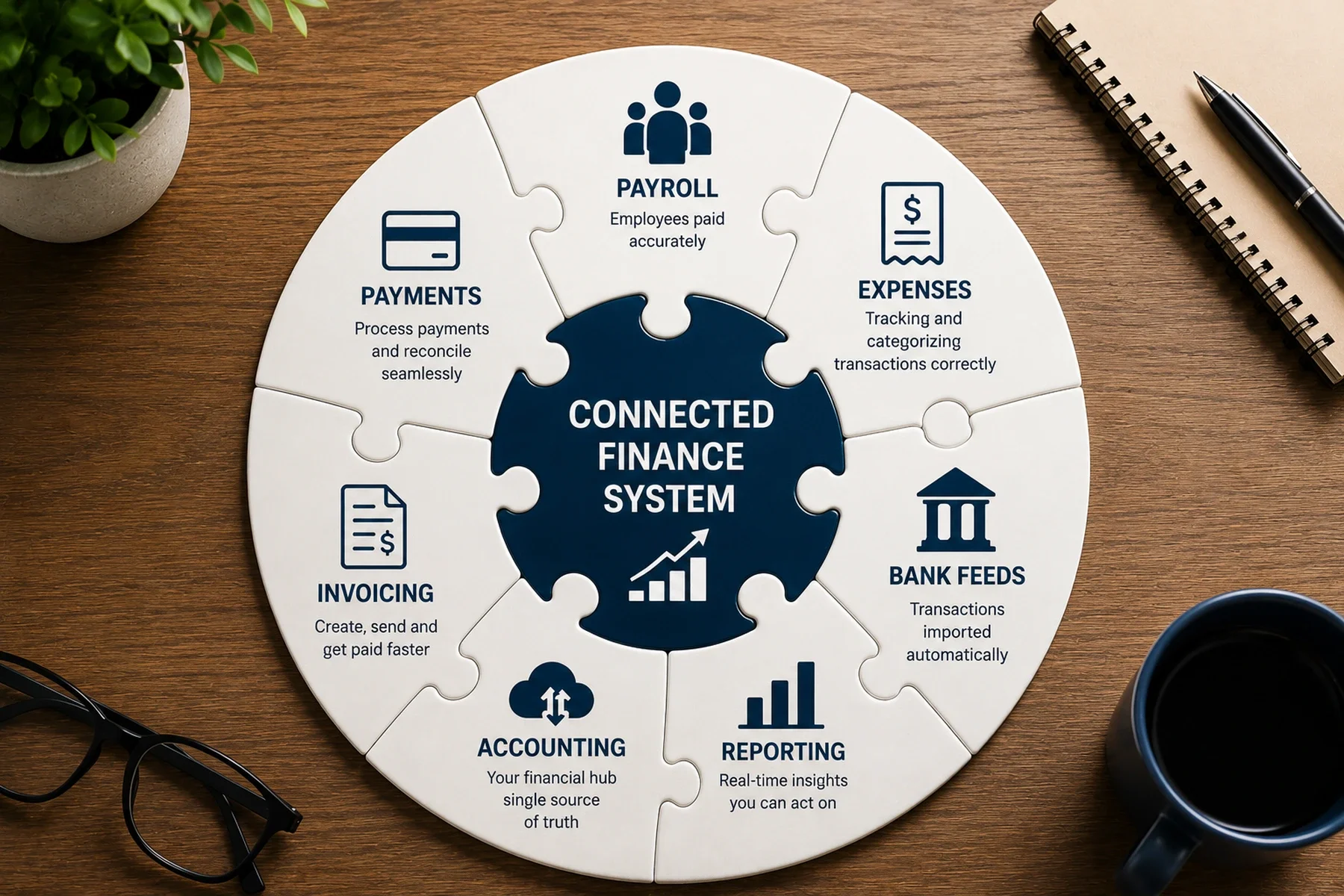
It is tempting to judge finance tools by their feature lists. A flashy dashboard or a clever expense scanner can feel like an instant upgrade. But the real value of any finance tool is what it sends to and receives from the rest of your system. A payroll platform that doesn't feed into your accounting software creates double entry. An invoicing app that lives on its own island means someone has to manually update the books every time a client pays.
This is the difference between a stack of tools and a tech stack. A stack of tools sits side by side. A tech stack connects end to end. When your tools share data automatically, your financial picture updates in real time. When they don't, you end up with outdated numbers and manual workarounds that eat up hours every week.
Think about a small contracting company running QuickBooks for accounting, a separate app for estimates and invoicing, and spreadsheets for job costing. Every month, someone has to pull numbers from three places and stitch them together. That process invites errors. It also means the owner can't check profitability on a Tuesday afternoon without asking someone to build a report first. Connected tools fix that by passing data between systems as transactions happen.
The first question a CFO asks isn't "What's the best tool?" It's "How will this connect to everything else?" That mindset shifts the whole conversation from features to flow. And flow is what gives a business owner clear, timely financial information without extra effort.
Building Your Tech Stack in the Right Order
A finance tech stack has layers, and the order matters. Trying to add forecasting tools before your core accounting is solid is like framing a roof before pouring the foundation. It looks productive, but the base isn't ready.
The first layer is always the core accounting system. For most small businesses, that means a cloud-based platform like QuickBooks Online or Xero. This is the hub. Every other tool should feed into it or pull from it. If the accounting system is messy, cluttered, or outdated, nothing built on top of it will be accurate. Getting this layer clean and current is priority one. That often means a cleanup project before any new tools get introduced.
The second layer handles the daily money flow. This includes payroll processing, invoicing, bill pay, and expense management. Each of these should connect directly to your core accounting platform. The goal is simple. When an employee gets paid, it shows up in the books automatically. When a client pays an invoice, it records itself. When someone buys supplies with a company card, the expense lands in the right category without manual entry.
The third layer is where the strategic work lives. This includes cash flow forecasting, budgeting tools, and financial dashboards that show what's happening across the business. These tools pull data from the first two layers and turn it into something a business owner can act on. This is where CFO services for small business really show their value, because choosing the right forecasting and reporting tools requires knowing what questions the business actually needs answered.
Where Most Small Business Tech Stacks Fall Apart
The most common failure isn't choosing the wrong tool. It's the gaps between tools. When one system doesn't connect to another, a spreadsheet fills the space. Over time, those gap-filling spreadsheets become the real operating system of the business. They hold formulas only one person understands, data that goes stale the moment it's entered, and version control problems that create confusion every month.
Another common problem is over-buying. A business signs up for a finance platform built for companies ten times their size. The tool has a hundred features, but the team only uses three of them. Meanwhile, they're paying for complexity that slows everyone down. The best tech stacks are right-sized for where the business is today, with room to grow.
Ignoring integrations during the buying process is another trap. Someone picks a tool because it looked great in a demo, only to discover later that it doesn't sync with their accounting platform. Now the team is either stuck with manual data entry or facing a painful switch. Before committing to any new software, the first question should always be whether it connects natively to your accounting system.
Virtual CFO services often catch these problems early. An outside financial advisor has seen dozens of small business tech setups and can spot the weak points quickly. They know which tools actually connect well, which ones promise integration but deliver headaches, and which combinations tend to work for businesses at your stage.
A Phased Roadmap to Modernize Your Finances
The good news is that fixing a disjointed tech stack doesn't require ripping everything out at once. A phased approach works best for small businesses that can't afford to pause operations while the finance system gets rebuilt.
Phase one is stabilizing the core. Get the accounting system clean, current, and connected to the bank. Phase two is automating the daily flow by connecting payroll, invoicing, and expense tools directly to the books. Phase three is adding the strategic layer with dashboards and forecasting that show the full financial picture. Most small businesses can move through all three phases in three to six months without overwhelming the team.
Fractional CFO services are built for exactly this kind of work. A part-time CFO helps you choose the right tools, set them up in the right order, and make sure everything actually connects. It's financial leadership without the full-time salary, and for growing businesses, it's often the difference between guessing at the numbers and knowing them.
If your reporting depends on spreadsheets held together with hope, it might be time for a conversation about building something better. North Peak Services helps small businesses design finance tech stacks that work together from day one. Book a free consultation to talk through where you are now and where to start.
